
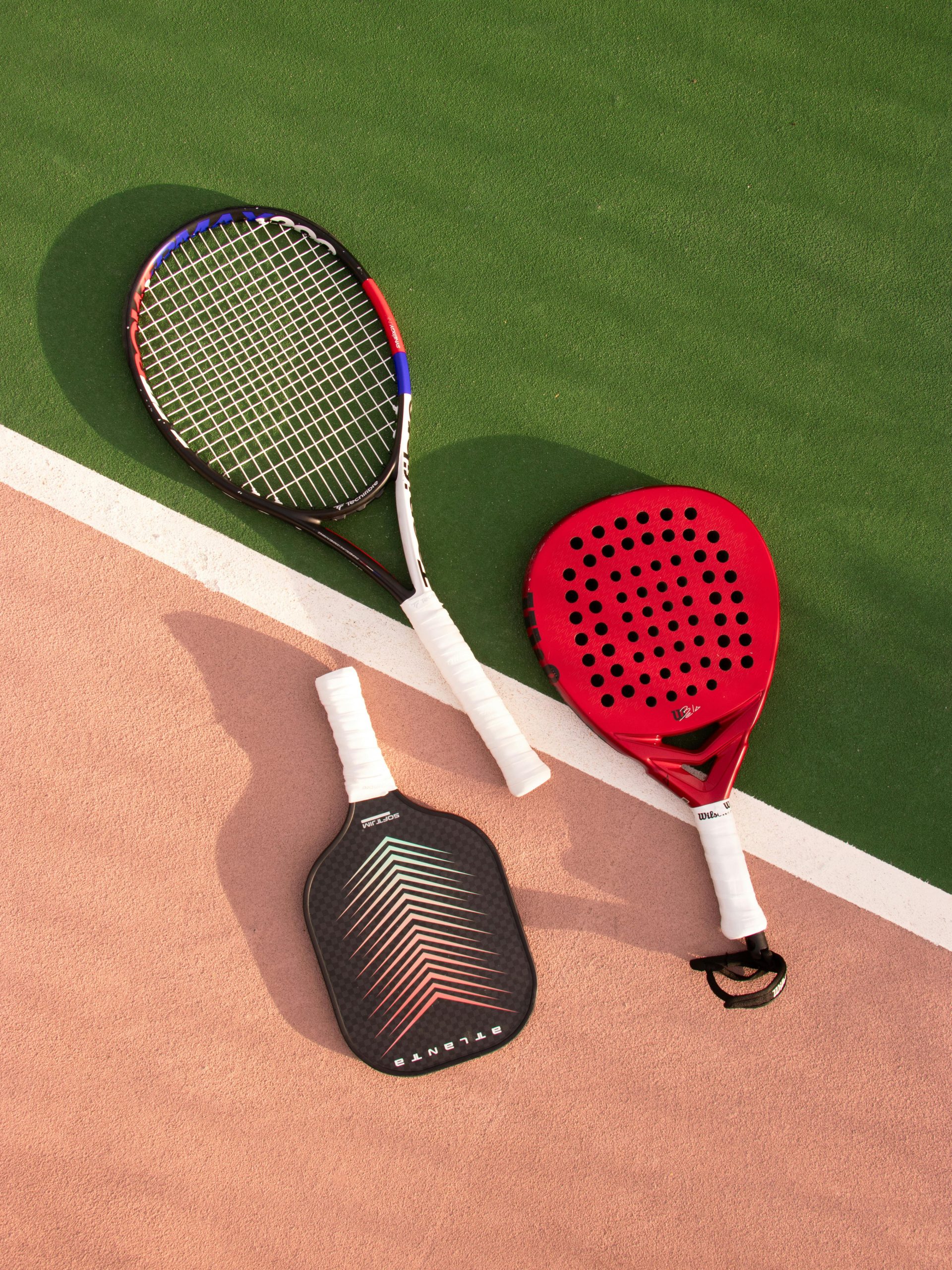
Tennis elbow and pickleball elbow are common causes of pain on the outside of the elbow, often associated with repetitive gripping, wrist movement, and forearm loading. Despite their names, these conditions are not limited to racquet or paddle sports and can also develop from work, exercise, hobbies, or everyday activities.
Medically, this type of lateral elbow pain is often referred to as lateral epicondylitis or, more accurately in persistent cases, lateral elbow tendinopathy. With the rapid growth of pickleball, similar symptoms are increasingly associated with repetitive paddle use and loading of the wrist extensor tendons.
While tennis elbow and pickleball elbow can be frustrating and sometimes slow to resolve, most people improve with time, appropriate load management, and conservative treatment.
What Is Tennis Elbow?
Tennis elbow affects the tendons that attach the forearm extensor muscles to the lateral epicondyle, the bony prominence on the outside of the elbow.
The extensor carpi radialis brevis (ECRB) tendon is commonly involved. This muscle helps extend and stabilize the wrist, particularly during gripping and repetitive hand movements.
Although the term epicondylitis suggests inflammation, persistent tennis elbow is generally understood as a tendinopathy involving changes within the tendon rather than simply an acute inflammatory condition.
Repeated or excessive loading can exceed the tendon's current capacity to adapt and recover, contributing to pain and reduced function.
What Causes Tennis Elbow and Pickleball Elbow?
Tennis elbow and pickleball elbow can develop when repetitive or excessive loading places more demand on the wrist extensor tendons than they are currently able to tolerate and recover from.
Although commonly associated with racquet and paddle sports, many people who develop lateral elbow pain have never played tennis or pickleball.
Potential contributing activities include:
- Tennis, pickleball, and other racquet or paddle sports
- Repetitive gripping or lifting
- Gardening and yard work
- Manual or trade-related activities
- Repetitive computer or occupational tasks
- Sudden increases in exercise or activity
- Repetitive use of tools
In pickleball, contributing factors may include frequent backhand strokes, repetitive wrist movements, off-center paddle contact, grip technique, equipment factors, and a rapid increase in playing frequency or intensity.
Often, the issue is not one particular movement but a mismatch between the amount of load placed on the tendon and its ability to tolerate and recover from that load.
Common Symptoms of Tennis Elbow and Pickleball Elbow
The most characteristic symptom of tennis elbow and pickleball elbow is pain or tenderness around the outside of the elbow. Symptoms often become more noticeable during gripping, lifting, wrist extension, or repetitive racquet and paddle movements.
Other symptoms may include:
- Pain over or near the lateral epicondyle
- Pain extending into the upper forearm
- Reduced or painful grip strength
- Pain when lifting objects
- Discomfort when opening jars or turning door handles
- Pain with resisted wrist extension
- Pain during tennis, pickleball, or other sports
- Stiffness or discomfort after periods of inactivity
Symptoms can range from mild irritation to pain that interferes with work, exercise, sports, and everyday activities.
Pain may improve when activity is reduced but return when normal loading resumes if the tendon has not regained sufficient capacity.
How Are Tennis Elbow and Pickleball Elbow Diagnosed?
Diagnosis is usually based on a person's history, symptoms, and physical examination.
A clinician may assess for localized tenderness around the lateral epicondyle and attempt to reproduce symptoms through movements involving gripping or resisted wrist or finger extension.
Imaging is not routinely required when the clinical presentation is typical.
However, ultrasound, X-ray, or MRI may sometimes be considered when symptoms are persistent or atypical, there has been significant trauma, or another condition needs to be ruled out.
Other causes of lateral elbow or arm pain can include nerve-related conditions, referred pain from the neck, joint pathology, or other tendon and musculoskeletal disorders.
An appropriate assessment is particularly important when symptoms include significant weakness, numbness, tingling, trauma, or an unusual pattern of pain.
How Long Does Tennis Elbow Last?
Recovery varies considerably from person to person.
Many cases improve gradually with conservative management, although symptoms can sometimes persist for several months or longer.
Tendons adapt relatively slowly, so recovery often requires patience and progressive rehabilitation rather than complete rest.
Importantly, pain does not always mean that further tendon damage is occurring. In many cases, appropriately modified activity and gradual loading are important parts of recovery.
The goal is generally to find a manageable level of activity while progressively rebuilding the tendon's ability to tolerate the demands of work, exercise, and sport.
Treatment for Tennis Elbow and Pickleball Elbow
Treatment for tennis elbow and pickleball elbow typically begins with conservative approaches designed to manage symptoms while gradually restoring the tendon's ability to tolerate load.
Treatment should be individualized according to symptom severity, duration, activity demands, and other contributing factors.
Exercise and Physical Therapy
Exercise-based rehabilitation is an important component of conservative treatment.
A rehabilitation program may include:
- Progressive wrist extensor strengthening
- Isometric exercises
- Eccentric and concentric loading
- Grip-strengthening exercises
- Mobility work when appropriate
- Gradual progression toward sport- or work-specific activities
The objective is not simply to rest the tendon indefinitely but to gradually improve its capacity to tolerate load.
For tennis and pickleball players, rehabilitation may also include an assessment of playing volume, technique, grip size, equipment, and how quickly activity has been increased.
Activity Modification
Complete rest is not always necessary or desirable.
Instead, temporary modifications can reduce excessive tendon loading while allowing a person to remain active.
These may include:
- Temporarily reducing repetitive gripping
- Decreasing tennis or pickleball volume
- Modifying activities that repeatedly aggravate symptoms
- Adjusting paddle or racquet grip when appropriate
- Avoiding sudden increases in training volume
- Gradually reintroducing more demanding activities as symptoms improve
The aim is to manage load rather than eliminate movement entirely.
Bracing or Taping
Some people find temporary symptom relief from a counterforce forearm strap, wrist support, or taping.
These approaches do not address the underlying tendon capacity on their own but may make certain activities more comfortable while rehabilitation progresses.
NSAIDs
Topical or oral nonsteroidal anti-inflammatory drugs (NSAIDs) may provide short-term pain relief for some individuals.
Because persistent lateral elbow tendinopathy is not considered simply an inflammatory disorder, NSAIDs do not address the underlying tendon changes.
Medication suitability varies according to individual health history and other medications, so NSAID use should be discussed with an appropriate healthcare professional when necessary.
Other Treatment Options for Persistent Elbow Pain
When symptoms persist despite appropriate conservative care, additional treatment options may be considered.
Corticosteroid Injections
Corticosteroid injections can sometimes provide significant short-term pain relief.
However, short-term improvement does not necessarily translate into better long-term outcomes, and recurrence can occur. Repeated corticosteroid injections around tendons may also carry potential risks.
For this reason, corticosteroid injections should be considered carefully rather than viewed as a routine long-term solution.
Platelet-Rich Plasma (PRP)
Platelet-rich plasma, or PRP, involves processing a patient's own blood to produce a platelet-concentrated preparation that is injected into the affected area.
PRP has been studied as a treatment option for persistent lateral elbow tendinopathy. However, research findings are mixed, and differences in preparation methods, injection techniques, patient selection, and study design make it difficult to draw definitive conclusions about its effectiveness.
It may be considered in selected chronic cases after discussion with an appropriately qualified healthcare provider.
Prolotherapy
Prolotherapy typically involves injecting a solution, often containing hypertonic dextrose, into or around the affected tissue.
It has been investigated for chronic tendinopathies, including lateral elbow pain, but the evidence remains less established than for exercise-based rehabilitation.
Further high-quality research is needed to better determine which patients, if any, are most likely to benefit.
Extracorporeal Shockwave Therapy (ESWT)
Extracorporeal shockwave therapy uses externally applied acoustic waves and has been studied for several chronic tendon disorders.
ESWT may help reduce pain and improve function in some people with persistent lateral elbow tendinopathy, although study results vary.
It is generally considered an adjunct rather than a replacement for progressive rehabilitation and appropriate load management.
Acupuncture for Tennis Elbow and Pickleball Elbow
Acupuncture for tennis elbow and pickleball elbow may be incorporated into a multimodal approach to pain management and rehabilitation.
Treatment may include local and distal acupuncture points selected according to the individual's presentation. Depending on the clinical situation, acupuncture may also be combined with techniques such as electroacupuncture or other appropriate adjunctive therapies.
Research suggests that acupuncture may help reduce pain and improve function in some people with lateral elbow pain, particularly in the short term. However, longer-term outcomes and differences between treatment protocols continue to be studied.
For this reason, acupuncture is best considered as one component of a broader treatment plan rather than a stand-alone cure.
A comprehensive approach may combine acupuncture with:
- Progressive tendon loading
- Appropriate strengthening
- Activity modification
- Ergonomic or technique changes
- Gradual return to sport or demanding activities
The overall goal is not only to manage pain but also to help restore comfortable movement and function.
When Is Surgery Needed?
Surgery is rarely necessary.
Most people with lateral elbow tendinopathy are treated without surgical intervention, and symptoms often improve over time.
Surgical evaluation may be considered when symptoms remain significantly limiting despite a prolonged period of appropriate non-surgical management and when the diagnosis has been carefully confirmed.
The specific surgical approach varies but may involve addressing abnormal or degenerative tendon tissue.
Recovery typically requires a period of rehabilitation and a gradual return to normal activity.
Tennis Elbow and Pickleball Elbow: Key Points
- Tennis elbow and pickleball elbow commonly cause pain on the outside of the elbow and can affect athletes and non-athletes alike.
- Despite the traditional term lateral epicondylitis, persistent symptoms are generally associated with tendinopathy rather than simply ongoing inflammation.
- Tennis, pickleball, repetitive gripping, occupational activities, and sudden increases in physical load can all contribute.
- Exercise-based rehabilitation, education, and appropriate activity modification form the foundation of conservative management.
- Complete rest is not always necessary; gradual, appropriately managed tendon loading is often an important part of recovery.
- Corticosteroid injections may provide short-term relief but require careful consideration because longer-term outcomes may be less favorable.
- Evidence for PRP, prolotherapy, and shockwave therapy varies, and these treatments should not be presented as universally effective.
- Acupuncture may help manage pain and improve short-term function as part of a comprehensive treatment plan.
- Surgery is uncommon and generally reserved for persistent, significantly limiting cases that have not responded to appropriate conservative treatment.
Recovering From Tennis Elbow and Pickleball Elbow
Tennis elbow and pickleball elbow can be persistent, but recovery is rarely about finding one single treatment that “fixes” the tendon.
A more comprehensive approach considers what may be contributing to the problem, manages excessive or repetitive loading, supports pain control, and gradually rebuilds strength and function.
Whether your symptoms developed from tennis, pickleball, work, exercise, or everyday activities, the goal is to help the elbow tolerate the activities that matter to you—not simply to avoid using it.
Early assessment may also help confirm the diagnosis, identify contributing factors, and rule out other potential causes of persistent elbow pain.
💡 You may also enjoy:
• Gall Bladder 34 (GB-34): The Acupuncture Point for Pain Relief, Flexibility, and Emotional Balance
• Chronic Pain and the Role of Acupuncture
• Upper & Lower Crossed Syndrome: Causes & Treatments
References
- Hohmann, E., Tetsworth, K. and Glatt, V. (2023) ‘Corticosteroid injections for the treatment of lateral epicondylitis are superior to platelet-rich plasma at 1 month but platelet-rich plasma is more effective at 6 months: An updated systematic review and meta-analysis of Level 1 and 2 studies’, Journal of Shoulder and Elbow Surgery, 32(9), pp. 1770–1783.
- Karjalainen, T.V., Silagy, M., O’Bryan, E. et al. (2021) ‘Autologous blood and platelet-rich plasma injection therapy for lateral elbow pain’, Cochrane Database of Systematic Reviews, 9(9), CD010951.
- Kim, Y.J., Wood, S.M., Yoon, A.P. et al. (2021) ‘Efficacy of nonoperative treatments for lateral epicondylitis: A systematic review and meta-analysis’, Plastic and Reconstructive Surgery, 147(1), pp. 112–125.
- Lhee, S.H., Lee, K.R. and Lee, D.Y. (2025) ‘Comparing the use of physiotherapy, shockwave therapy, prolotherapy, and platelet-rich plasma for chronic lateral epicondylosis: A prospective, randomized controlled trial with 2-year follow-up’, American Journal of Sports Medicine, 53(11), pp. 2707–2714.
- Liu, W.C., Chen, C.T., Lu, C.C. et al. (2022) ‘Extracorporeal shock wave therapy shows superiority over injections for pain relief and grip strength recovery in lateral epicondylitis: A systematic review and network meta-analysis’, Arthroscopy: The Journal of Arthroscopic & Related Surgery, 38(6), pp. 2018–2034.e12.
- Tang, S., Wang, X., Wu, P. et al. (2020) ‘Platelet-rich plasma vs autologous blood vs corticosteroid injections in the treatment of lateral epicondylitis: A systematic review, pairwise and network meta-analysis of randomized controlled trials’, PM&R, 12(4), pp. 397–409.
- Wolf, J.M. (2023) ‘Lateral epicondylitis’, New England Journal of Medicine, 388(25), pp. 2371–2377.
- Xu, Y., Li, T., Wang, L. et al. (2024) ‘Platelet-rich plasma has better results for long-term functional improvement and pain relief for lateral epicondylitis: A systematic review and meta-analysis of randomized controlled trials’, American Journal of Sports Medicine, 52(10), pp. 2646–2656.