
My recent visit to Australia was a deeply personal return—filled with connection, emotion, family, and the quiet nourishment that comes from spending time with the people we love and in places that still feel like home.
It was not a grand journey across the country. Instead, it was a meaningful few weeks shaped by friendship, family, difficult moments, beautiful landscapes, and the chance to slow down and simply be present.
Beginning My Recent Visit to Australia in Sydney
I began my visit in Sydney, catching up with wonderful friends in the heart of Sydney Harbour.
There is something very special about sitting with people who have known you through many different chapters of your life. With the harbour around us, conversation flowed easily, stories were shared, and for a little while, it felt as though no time had passed at all.
Living so far from Australia means these moments have become increasingly precious to me.
A Week With My Mother: Love in All Its Forms
From Sydney, I travelled to spend a week with my mother, who is living in an aged care facility with late-stage dementia.
This is always the most emotionally difficult part of returning home.
There are moments when Mum recognises me—her eyes light up, she smiles, and suddenly there is a glimpse of the person I have always known. Then there are other moments when she does not know who I am, and I am simply another person sitting beside her.
Those moments are hard. Dementia asks us to let go of expectations and meet the person we love exactly where they are, even when that place changes from one moment to the next.
And yet, within the sadness, there were moments of genuine connection.
Holding her hand, brushing her hair, sitting quietly beside her, or simply being present became meaningful in ways that words cannot always capture. I was reminded that connection does not necessarily disappear when memory does. Sometimes, it simply takes a different form.
There is grief in watching someone you love live with dementia, but there is also an enormous amount of love and tenderness. During that week, the two often existed side by side.
For those navigating dementia within their own families, the Alzheimer’s Association offers helpful information and resources about dementia, caregiving, and supporting loved ones through the different stages of the disease.
Family, Friends, and Familiar Faces
My recent visit to Australia also gave me the opportunity to spend time with my twin brother and his family, as well as close friends from Brisbane.
There is something incredibly grounding about reconnecting with people who have known you for decades. Shared history has a way of reminding you who you are beneath the layers of work, schedules, responsibilities, and the busyness of everyday life.
Living on the other side of the world makes these relationships no less important, but it does make time together feel especially valuable.
It was also a reminder of something I often speak about in my work: health is about more than what happens physically. Connection, meaningful relationships, rest, time outdoors, and having space to recover from the demands of everyday life are all important parts of our overall well-being.
It is something I have reflected on before in Unplanned and Unplugged Days: The Joy of Slowing Down—sometimes stepping away from our usual routines and creating space to simply be present is exactly what we need.Tasmania: Rest, Nature, and Space to Breathe
For the final week of our trip, my husband and I travelled to Launceston, Tasmania.
After the emotional intensity of the previous weeks, Tasmania gave me something I did not fully realise I needed: space to breathe.
We ate beautiful, fresh Tasmanian food, explored spectacular landscapes, slept in, slowed down, and allowed ourselves to move at a very different pace.
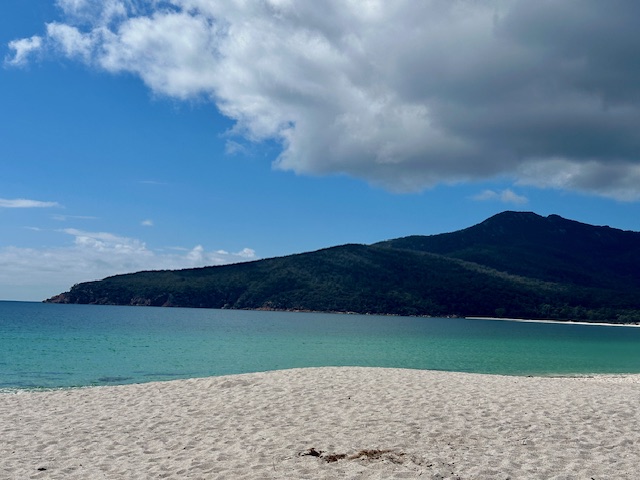
We hiked at Cradle Mountain, surrounded by crisp air, ancient forests, and dramatic mountain scenery. We also explored Freycinet National Park, where the sweeping coastline and vastness of the landscape had an almost immediate grounding effect.
Both are part of Tasmania’s extraordinary network of protected natural areas, and Tasmania Parks and Wildlife Service provides information about the parks, walking trails, conservation, and planning a visit.
There were no alarms to set and nowhere we urgently needed to be. Our days were filled with walking, fresh air, good food, laughter, connection, and time to simply slow down.
Many of these simple experiences—slow breathing, meaningful social connection, laughter, time in nature, and nourishing food—can help support parasympathetic activity and healthy nervous system regulation. I explore some of these connections further in The Vagus Nerve: A Key to Health and Healing.
Sometimes restoration is not about doing more. It is about creating enough space to notice what is already around us—the landscape, the food, the people we love, and the simple luxury of having nowhere else to be.
Tasmania gave us that space.Coming Home After My Visit to Australia
As I settle back into life and work, I find myself reflecting on how many different emotions can exist within a single journey.
This trip held joy and sadness, laughter and grief, reconnection and change.
It reminded me that life does not always separate itself neatly into good experiences and difficult ones. Often, they exist together.
I came home deeply grateful—for old friendships that endure across distance, for family and shared history, for the moments of connection I still have with my mother, and for the restorative power of nature and time spent with the people I love.
Most of all, this trip reminded me of something that can be easy to lose sight of in the busyness of everyday life:
To be present.
To appreciate the people we love while we can.
To make space for both grief and joy.
And to notice the beautiful moments along the way.