
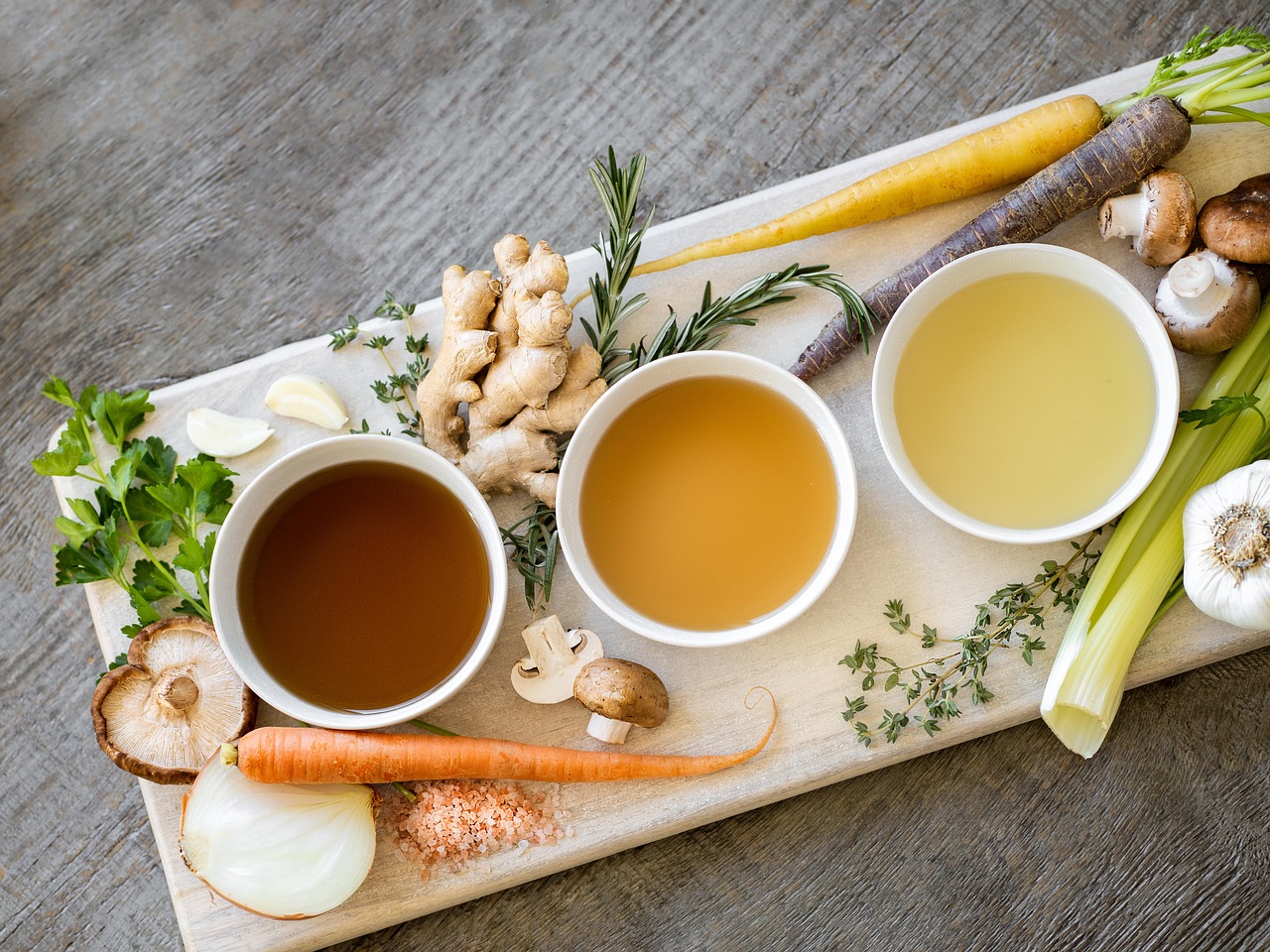
Bone broth has experienced a global resurgence in popularity, appearing in restaurants, cafés, grocery stores, and home kitchens. Once simply a traditional way of making use of bones and connective tissue, it is now promoted for everything from joint and digestive health to skin, immunity, and inflammation.
The benefits of bone broth are often attributed to its collagen, gelatin, amino acids, and mineral content. While this traditional food can certainly be a nourishing addition to the diet, some of the health claims surrounding it have moved ahead of the science.
So, what does the research actually tell us about bone broth—and where does tradition fit into the picture?
Bone Broth Benefits Through a Traditional Chinese Medicine Lens
Long-simmered broths have been valued as nourishing foods across cultures for centuries.
In Traditional Chinese Medicine (TCM), food is viewed not only according to its nutritional composition but also according to its energetic and therapeutic qualities. Foods may be described as warming or cooling, nourishing or dispersing, and selected according to an individual's constitution and pattern of disharmony.
Traditionally prepared meat and bone broths are often considered deeply nourishing foods and may be incorporated into Chinese dietary therapy during periods of weakness, recovery, aging, or increased nutritional demand.
From a TCM perspective, the therapeutic qualities of a broth also depend on what goes into it. Different meats, bones, vegetables, herbs, and spices may be selected to support different patterns.
Bone-based broths are traditionally associated with nourishing Qi, Blood, and Jing, while warm, slowly cooked foods may also be used to support digestive function when appropriate for the individual.
These traditional concepts are distinct from modern biomedical claims and should not be interpreted as evidence that bone broth treats specific diseases.
What Is Actually in Bone Broth?
The nutritional composition of bone broth varies considerably from one batch to another.
It depends on factors including:
- The type and quantity of bones used
- How much cartilage, connective tissue, marrow, and meat remains on the bones
- The ratio of bones to water
- Cooking temperature and duration
- Acidity of the cooking liquid
- Additional vegetables, herbs, and ingredients
This variability is important because there is no single nutritional profile that applies to every homemade or commercially prepared broth.
One of its most notable components is gelatin, which forms when collagen-rich connective tissues are cooked for an extended period.
During digestion, these proteins are broken down into amino acids and peptides that the body can use for many biological functions.
Depending on how it is prepared, broth may provide amino acids such as glycine, proline, and hydroxyproline, although concentrations can vary substantially.
Is Bone Broth a Good Source of Collagen?
Collagen is one of the main reasons bone broth has attracted so much attention.
It is the most abundant structural protein in the human body and is an important component of:
- Skin
- Bone
- Cartilage
- Tendons
- Ligaments
- Connective tissue
When collagen-rich animal tissues are slowly cooked, some of the collagen is converted into gelatin.
However, there is an important distinction between consuming homemade broth and taking the standardized hydrolyzed collagen peptides used in many clinical studies.
A 2019 study by Alcock et al. analyzed bone broth and found considerable variability in its amino-acid content. The researchers concluded that bone broth was unlikely to provide reliable concentrations of key collagen precursors comparable to the standardized collagen supplements used in research.
This does not mean that bone broth has no nutritional value.
It simply means that we should not assume a cup of homemade broth provides the same dose—or produces the same clinical effects—as a standardized collagen supplement.
Mineral Content: Is Bone Broth Really Rich in Minerals?
Bone broth is frequently described as an exceptionally rich source of calcium, magnesium, potassium, and other minerals.
The evidence is more nuanced.
Some minerals can migrate from bones and other ingredients into the cooking liquid, but the amount depends heavily on preparation methods.
Research examining bone soups has shown that cooking conditions affect the release of nutrients and flavor compounds. The final nutritional composition can therefore differ considerably between recipes and commercial products.
Bone broth can contribute nutrients to the overall diet, but it should not automatically be considered a major or reliable source of calcium, magnesium, or other essential minerals.
A varied, nutrient-dense diet remains important for meeting micronutrient needs.
Collagen, Gelatin, and Joint Health
Another commonly discussed benefit is support for joints and connective tissue.
Research into collagen peptides and gelatin has generated interest in their potential role in musculoskeletal health. Collagen-derived amino acids provide building blocks that the body can use in connective tissues.
However, much of the clinical research in this area has studied standardized collagen or gelatin products—not traditional homemade broth.
We therefore cannot assume that drinking bone broth produces the same outcomes.
It can certainly form part of a balanced, protein-rich diet that provides nutrients needed for tissue maintenance, but it should not be presented as a treatment for arthritis, osteoporosis, joint injuries, or other musculoskeletal conditions.
Bone Broth and Digestive Health
One of the most popular claims surrounding bone broth is that it can “heal the gut” or repair a “leaky gut.”
This claim needs some qualification.
Warm broths can be an easy and comforting way to consume fluids and nutrients, particularly when appetite is reduced or when someone prefers simple, easily incorporated foods.
Bone broth also contains gelatin-derived amino acids and peptides that have generated interest in gastrointestinal research.
A 2021 study by Mar-Solís et al. investigated bone broth in a mouse model of ulcerative colitis and reported anti-inflammatory effects and changes associated with intestinal tissue protection.
This is interesting preliminary research, but animal studies cannot establish that drinking bone broth treats inflammatory bowel disease, intestinal permeability, or other gastrointestinal disorders in humans.
Human clinical trials are needed before stronger conclusions can be drawn.
If you are interested in digestive health, you can also read [Gut Barrier Repair: Rebuilding and Restoring the Intestinal Lining – ADD INTERNAL LINK].
What About Inflammation?
Bone broth is also frequently described as “anti-inflammatory.”
Again, the science requires more nuance.
Depending on its ingredients and preparation, broth contains a mixture of amino acids, peptides, fats, minerals, and other compounds. Some of these compounds have biological activities that are being investigated in laboratory and animal research.
That is different from demonstrating that drinking bone broth meaningfully reduces systemic inflammation in humans.
For overall health and healthy inflammatory regulation, the entire dietary pattern matters much more than any single food.
Dietary patterns rich in vegetables, fruits, legumes, whole grains where tolerated, extra-virgin olive oil, nuts, seeds, herbs, spices, and omega-3-rich fish have substantially stronger evidence for supporting cardiovascular and metabolic health.
Bone broth can fit comfortably within this type of nutrient-dense dietary pattern without needing to be considered a miracle food.
Does Bone Broth Support the Immune System?
Chicken soup and other warm broths have long been consumed during colds, respiratory infections, and periods of convalescence.
There are practical reasons why broth can be comforting when we are unwell.
Warm liquids can support hydration, provide nourishment when appetite is reduced, and temporarily soothe the throat and upper respiratory tract.
However, claims that bone broth specifically “boosts the immune system” or shortens the duration of a cold are not well established by clinical research.
A more accurate way to think about it is as a nourishing food that can contribute to an overall dietary pattern that supports normal immune function.
For a Chinese medicine perspective on immune resilience, you may also enjoy [Yu Ping Feng San Benefits: New Immune Evidence – ADD INTERNAL LINK].
A Versatile Addition to the Kitchen
One of the best reasons to make bone broth has little to do with health claims: it is incredibly useful in the kitchen.
A flavorful homemade broth can be used as a base for:
- Soups and stews
- Sauces and gravies
- Braised vegetables
- Beans and legumes
- Risotto and grain dishes
- Slow-cooked meats
- Other savory dishes
It can add depth and richness to meals while making use of bones and other ingredients that might otherwise be discarded.
This combination of practicality, flavor, and tradition is part of the reason broth-making has survived across generations and cultures.
Sustainability, Ethics, and Sourcing
The renewed interest in bone broth has also brought greater attention to how animal products are sourced.
Using bones to make broth can be an economical way to use more of an animal and potentially reduce food waste.
When purchasing bones, you may wish to choose producers whose animal-welfare and farming practices align with your preferences.
Terms such as grass-fed, pasture-raised, free-range, and organic describe different agricultural practices. However, these labels should not automatically be interpreted as meaning that the finished broth will contain substantially higher concentrations of nutrients.
Good sourcing can be important for many reasons, but claims of nutritional superiority should be supported by evidence rather than assumed.
Are There Any Downsides?
For most people, bone broth can simply be enjoyed as a food. There are, however, a few considerations.
Commercial products can contain significant amounts of sodium, so checking the nutrition label is worthwhile, particularly for people who have been advised to limit sodium intake.
Researchers have also investigated the presence of essential and potentially toxic metals in animal bone broths. A 2017 study by Hsu et al. found that concentrations varied and concluded that the levels of toxic metals identified in the samples studied were relatively low in relation to established dietary thresholds.
This does not mean that every product has an identical composition. Ingredients, sourcing, processing, and preparation methods all matter.
People with specific medical conditions, food allergies, histamine intolerance, or medically prescribed dietary restrictions may also require individualized advice.
Dr. Clark’s Homemade Bone Broth Recipe
Making your own broth gives you control over the ingredients, seasoning, sodium level, and cooking process.
Ingredients
- 2–3 lbs beef, chicken, or pork bones, preferably from a trusted source
- 1 carrot, chopped
- 2 celery stalks, chopped
- 1 medium onion, chopped (optional)
- 1 garlic clove (optional)
- 1–2 bay leaves
- 2 tablespoons apple cider vinegar
- 1 tablespoon peppercorns
- Filtered water sufficient to cover the ingredients
Instructions
Place all ingredients into a 6-quart slow cooker and add enough filtered water to cover.
Cook on low for approximately 12–24 hours, depending on the type of bones and how rich you prefer your broth.
Some traditional recipes call for cooking broth for up to 48 hours. Longer cooking changes the flavor and extraction of compounds, but a longer cooking time should not automatically be assumed to make the broth more nutritious.
Once cooked, strain through a fine mesh sieve and discard the solids.
Allow the broth to cool promptly before refrigerating. Once chilled, the fat will rise and solidify on the surface. You can remove some or all of it according to your preference.
Store safely in the refrigerator for short-term use or freeze in individual portions for later.
The Bottom Line
The benefits of bone broth are best understood without turning this traditional food into a miracle cure.
Depending on how it is prepared, bone broth can provide gelatin, collagen-derived amino acids, flavor, hydration, and variable amounts of minerals and other nutrients. It can also be an economical and sustainable way to make use of animal bones and connective tissue.
What the current evidence does not establish is that bone broth alone heals the gut, treats arthritis, significantly reduces systemic inflammation, boosts immunity, or provides the same benefits as standardized collagen supplements.
That does not diminish its value.
Sometimes we do not need to exaggerate the health claims surrounding traditional foods to appreciate them.
A warm bowl of homemade broth can be nourishing, comforting, versatile, economical, and delicious. When incorporated into a varied, nutrient-dense diet, those qualities alone make it a worthwhile addition to the kitchen.
💡 You may also enjoy:
• Zu San Li (ST-36): A Powerhouse Acupuncture Point for Health and Vitality
• Warm Soups for Winter: 3 Nourishing Bean Soup Recipes
• Digestion Series (Part 1): The Forgotten Steps
References
- Alcock, R.D., Shaw, G.C. and Burke, L.M. (2019) 'Bone broth unlikely to provide reliable concentrations of collagen precursors compared with supplemental sources of collagen used in collagen research', International Journal of Sport Nutrition and Exercise Metabolism, 29(3), pp. 265-272. doi:10.1123/ijsnem.2018-0139.
- Fallon Morell, S. and Daniel, K.T., 2014. Nourishing Broth: An Old-Fashioned Remedy for the Modern World. Illustrated. September 30. United States: Grand Central Life & Style.
- Gimbar, M. (2017) 'A sip above the rest…Is bone broth all its boiled up to be?', Journal of Renal Nutrition, 27(6), pp. e39–e40. doi:10.1053/j.jrn.2017.08.003.
- Hsu, D.J., Lee, C.W., Tsai, W.C. and Chien, Y.C. (2017) 'Essential and toxic metals in animal bone broths', Food and Nutrition Research, 61(1), 1347478. doi:10.1080/16546628.2017.1347478.
- León-López, A., Morales-Peñaloza, A., Martínez-Juárez, V.M., Vargas-Torres, A., Zeugolis, D.I. and Aguirre-Álvarez, G. (2019) 'Hydrolyzed collagen-sources and applications', Molecules, 24(22), 4031. doi:10.3390/molecules24224031. PMID: 31703345; PMCID: PMC6891674.
- Malison, A., Arpanutud, P. and Keeratipibul, S. (2021) 'Chicken foot broth byproduct: A new source for highly effective peptide-calcium chelate', Food Chemistry, 345, 128713. doi:10.1016/j.foodchem.2020.128713.
- Mar-Solís, L.M., Soto-Domínguez, A., Rodríguez-Tovar, L.E., Rodríguez-Rocha, H., García-García, A., Aguirre-Arzola, V.E., Zamora-Ávila, D.E., Garza-Arredondo, A.J. and Castillo-Velázquez, U. (2021) 'Analysis of the anti-inflammatory capacity of bone broth in a murine model of ulcerative colitis', Medicina, 57(11), 1138. doi:10.3390/medicina57111138.
- Meng, Q., Zhou, J., Gao, D., Xu, E., Guo, M. and Liu, D. (2022) 'Desorption of nutrients and flavor compounds formation during the cooking of bone soup', Food Control, 132, 108408. doi:10.1016/j.foodcont.2021.108408.
- Straschil, U., Witmer, K., Delves, M.J., Marks, S.D. et al. (2019) 'Screen of traditional soup broths with reported antipyretic activity towards the discovery of potential antimalarials', Archives of Disease in Childhood. Available at: http://adc.bmj.com.